
Adventuring made easy
Our dedicated travel consultants make adventuring easy for you by taking away all of the admin. Your only jobs are to train for the adventure if necessary and then pack your bags!







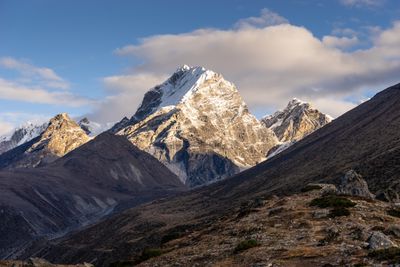
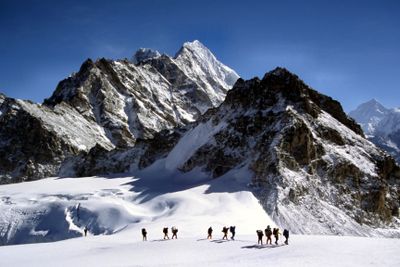
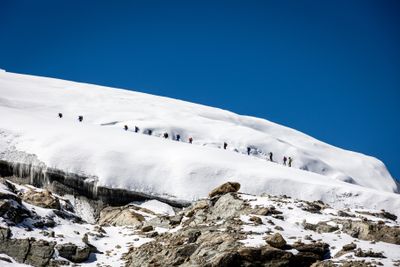
The iconic Khumbu region of the Himalayas is not just the playground of Everest mountaineers: it also offers many exciting semi-technical mountains suited to more novice or amateur climbers. Join us in summiting one of the region's 6,000 m peaks and we'll ensure you receive the training that you need during the expedition.
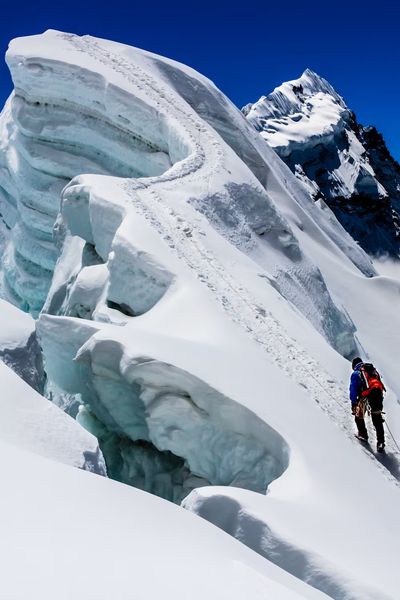
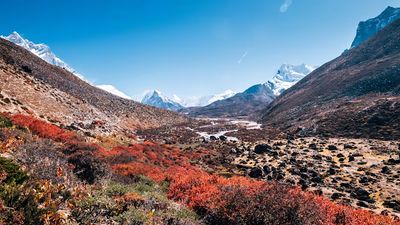
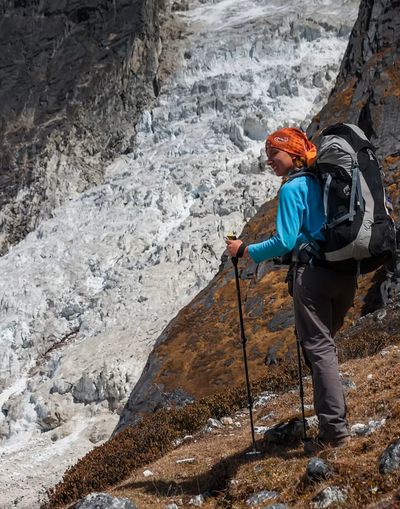
We offer three fantastic Himalayan peak climbs: Mera Peak (6,476 m), the perfect introductory climb for newbie mountaineers; Island Peak (6,189 m), a beautiful climb that includes a visit to Everest Base Camp on the return trek; and Lobuche East Peak (6,119 m), a more technical climb that also includes a visit to Everest Base Camp
Here's all you need to know to plan a trip to Nepal and also prepare properly for trekking and peak climbing in the Himalayas.

Nepali

Nepali rupee (NPR)

Nepal has one international airport: Tribhuvan International Airport (KTM).
Usually you fly from Kathmandu to Tenzing-Hillary Airport (LUA) in Lukla to start trekking in the Everest region, but the former's airport is undergoing renovations and so many domestic flights aren't operating right now. This means you need to drive south to Ramechhap Airport (RHP) and fly to Lukla from there.
The two climbing seasons are October to December and then April and May.
You can obtain a tourist visa quite easily at Tribhuvan International Airport in Kathmandu when your flight lands. The Government offers 15- and 30-day tourist visas for $30 (€27) and $50 (€45) respectively. You can learn more in Your Nepal travel questions answered.

There are no mandatory vaccinations for travel to Nepal. Note that you do need comprehensive travel insurance that covers you for mountaineering. We also advise speaking with your GP about your travel plans, particularly in terms of altitude sickness.
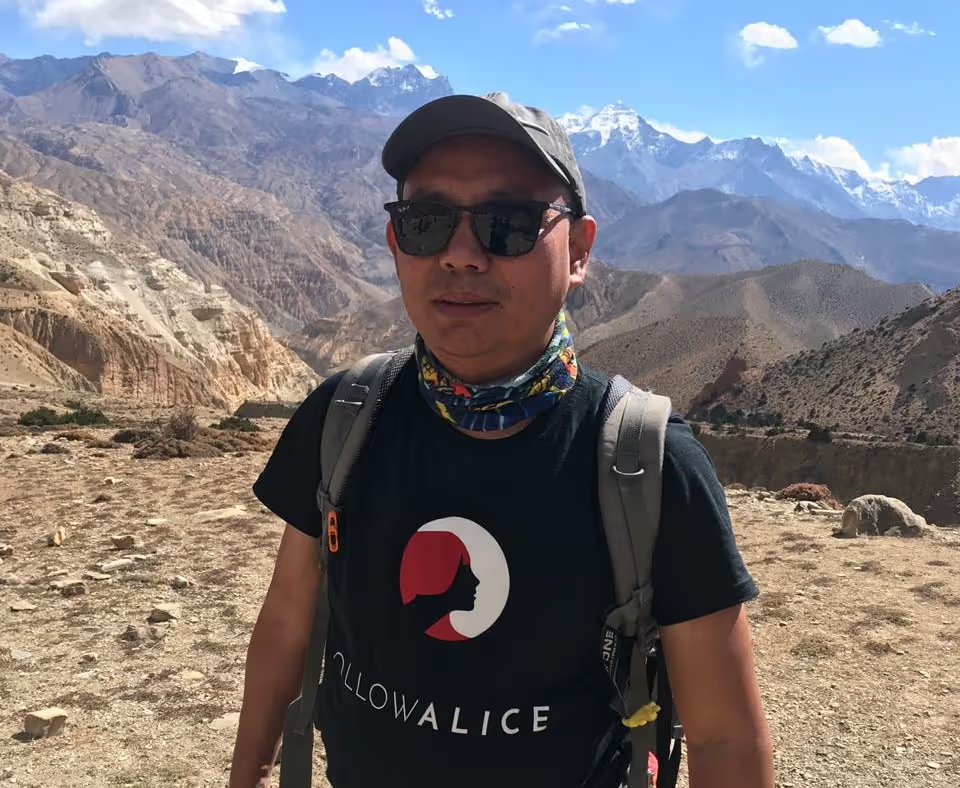
Sonam, who grew up in the Everest region of Nepal, is a mountain man through and through. He's a highly experienced and knowledgeable trek guide, and someone you can trust to lead you safely through the formidable Himalayas!


We’re one of the only travel companies worldwide with perfect 5* reviews
Our dedicated travel consultants make adventuring easy for you by taking away all of the admin. Your only jobs are to train for the adventure if necessary and then pack your bags!
Our local guides look after you in every way. Our goal is to give every traveller the feeling you get when a friend is showing you their country.

On average, over 70% of your trip price stays in the local economy. It's important to us that the visited communities benefit the most since they're the ones hosting travellers.














Altitude sickness, also known as acute mountain sickness (AMS), is how your body reacts to high elevations where the air has less oxygen. It usually starts to affect people at around 3,000 metres (9,000 feet) above sea level. Most trekkers experience mild symptoms. The best way to prevent altitude sickness is to ascend slowly, allowing your body time to adjust to each new height. There are also other steps you can take to reduce the risk and ease symptoms if they occur.
Before heading to high altitudes, have a quick chat with your doctor.


Follow Alice Tours (T) LTD is registered in Tanzania and holds all the necessary licences to run Kilimanjaro climbs and safaris.