







Climbing Mount Kilimanjaro is a significant physical and mental challenge, but reaching the summit is a team effort. Every successful ascent relies on the dedication of the mountain’s unsung heroes, who are the porters, cooks, and guides who carry gear, prepare meals, and ensure climbers’ safety. At the end of each trek, climbers honour their efforts through a time-honoured tradition known as the Kilimanjaro tipping ceremony.
This ceremony is more than a simple exchange of money. It’s a structured, ethical practice that celebrates teamwork, respect, and gratitude. For the porters and guides, it represents fair recognition of their effort. For trekkers, it’s a moment to give back to the people who helped them reach Africa’s highest peak.
The procedures for Kilimanjaro tipping have been developed by the Kilimanjaro Responsible Trekking Organization, a non-profit organisation dedicated to ensuring the fair and ethical treatment of porters on Mount Kilimanjaro. As a KRTO partner, Follow Alice adheres to these standards to ensure transparency and fairness for every crew member.
Follow Alice breaks down the Kilimanjaro tipping ceremony step by step. We’ll walk you through the process of the Kilimanjaro Responsible Trekking Organization standards, providing clear guidance on tipping, the recommended amounts, how the ceremony is conducted, and exactly what you need to know to show proper appreciation to the porters who make your climb possible. If you still have questions, please feel free to schedule a call with us.
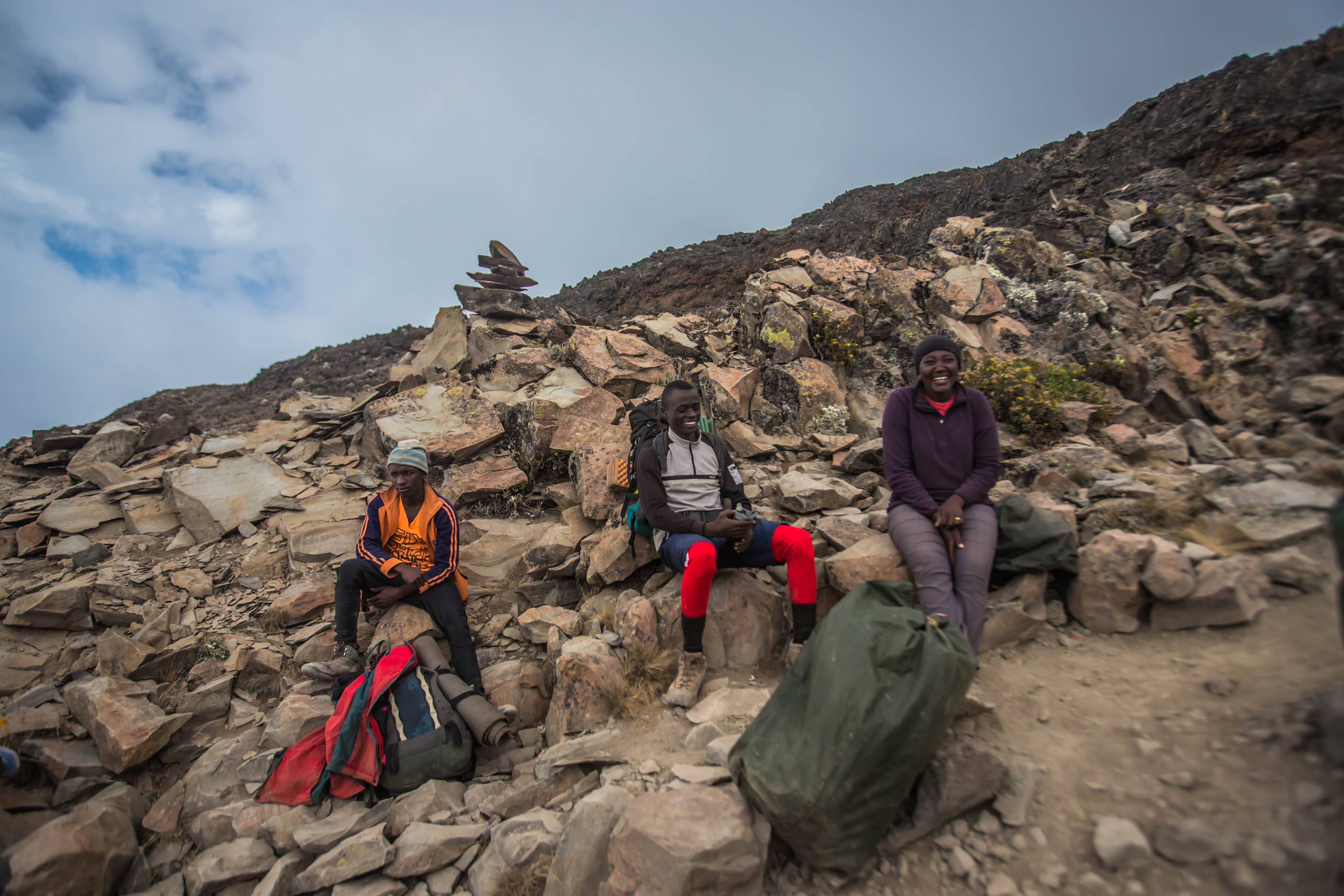
Follow Alice porters taking a break on the mountain.
Learn more: The ultimate Kilimanjaro packing list (+ free PDF)
Why porters’ work matters
On every climb, you’ll see them, the porters arriving before dawn, sprinting ahead to your next campsite, rigging tents, cooking your eggs, carrying heavy loads, even fixing frozen zip-locks when the wind rips through camp. Their work is relentless, unsung and vital.
From the moment you step into the trailhead at Marangu Gate or Machame Gate until you collapse into your hotel bed in Moshi, the crew has been working for you. They carry not only your bags, but also your hopes and your safety. As one guide told his group:
Your tip is not just a thank you ,it helps our families, our village, our future.
Even after the summit, while you are taking pictures and savouring victory, the cook is breaking camp, the porters are descending in shifts, and the guide stays back, ensuring the last luggage is packed. The tipping ceremony is one of the rare moments when the many who labour in silence are publicly honoured.
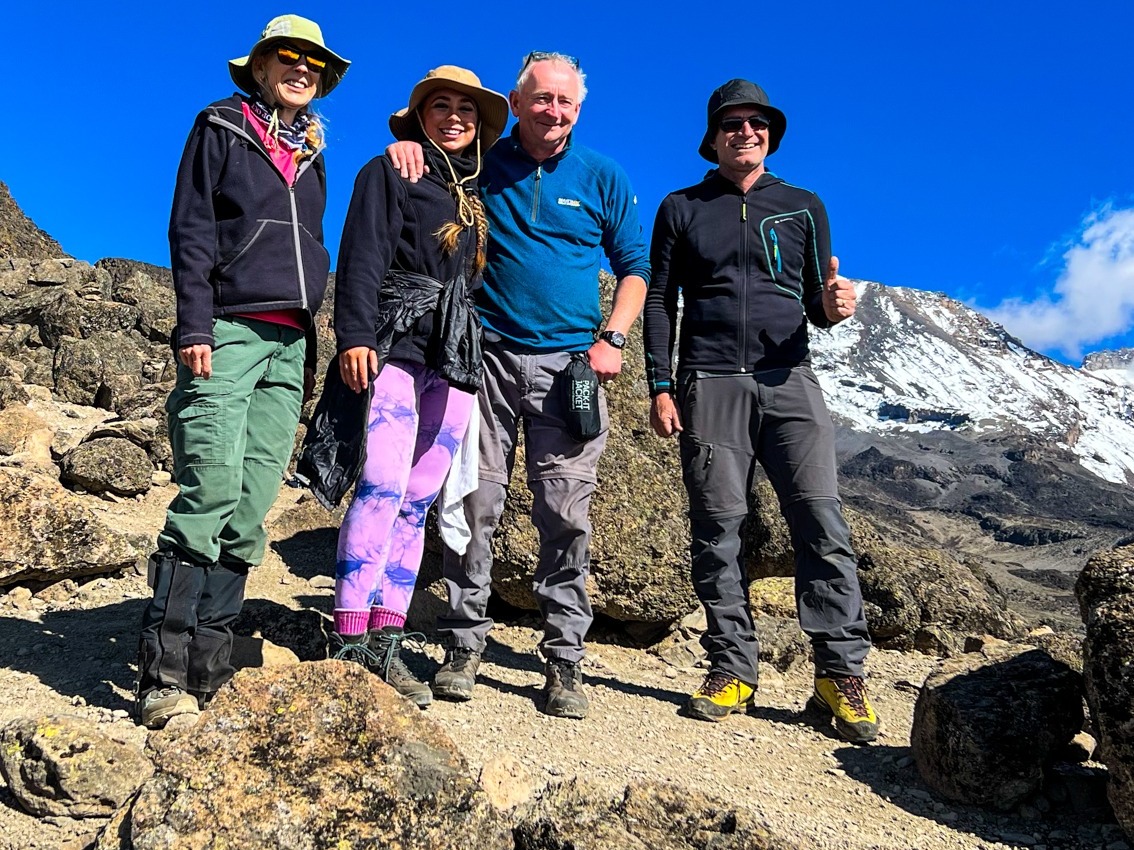
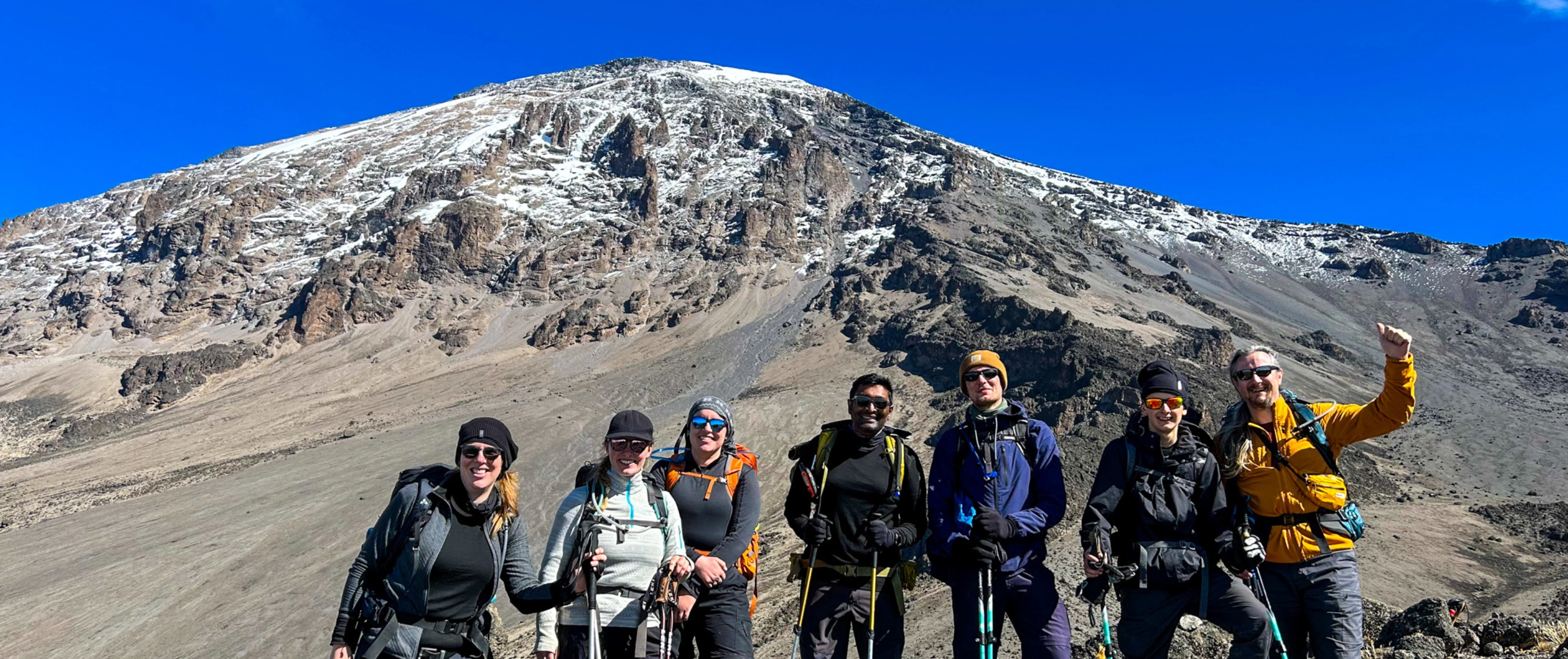
A group of trekkers is taking a break while posing for a photo on Mount Kilimanjaro.
Learn more: Why prices differ so much between Kilimanjaro operators
The role of the Kilimanjaro Responsible Trekking Organization
The Kilimanjaro Responsible Trekking Organization (previously known as the Kilimanjaro Porters Assistance Project (KPAP) was established to improve working conditions for porters on Mount Kilimanjaro. The organisation advocates for fair pay, proper equipment, safe working loads, and ethical treatment of mountain staff.
As a KRTO partner, Follow Alice strictly follows their recommended tipping procedures and reporting structure. As representatives periodically review climbs to ensure that porters:
- Carry no more than 20 kg per person, as required by regulation.
- Receive three daily meals while on the mountain.
- Sleep in adequate, sheltered conditions.
- They are provided with proper clothing and gear for high-altitude conditions.
- Receive their full share of tips through transparent documentation.
By booking with a KRTO partner company, trekkers can be confident that their expedition supports fair and responsible employment practices.
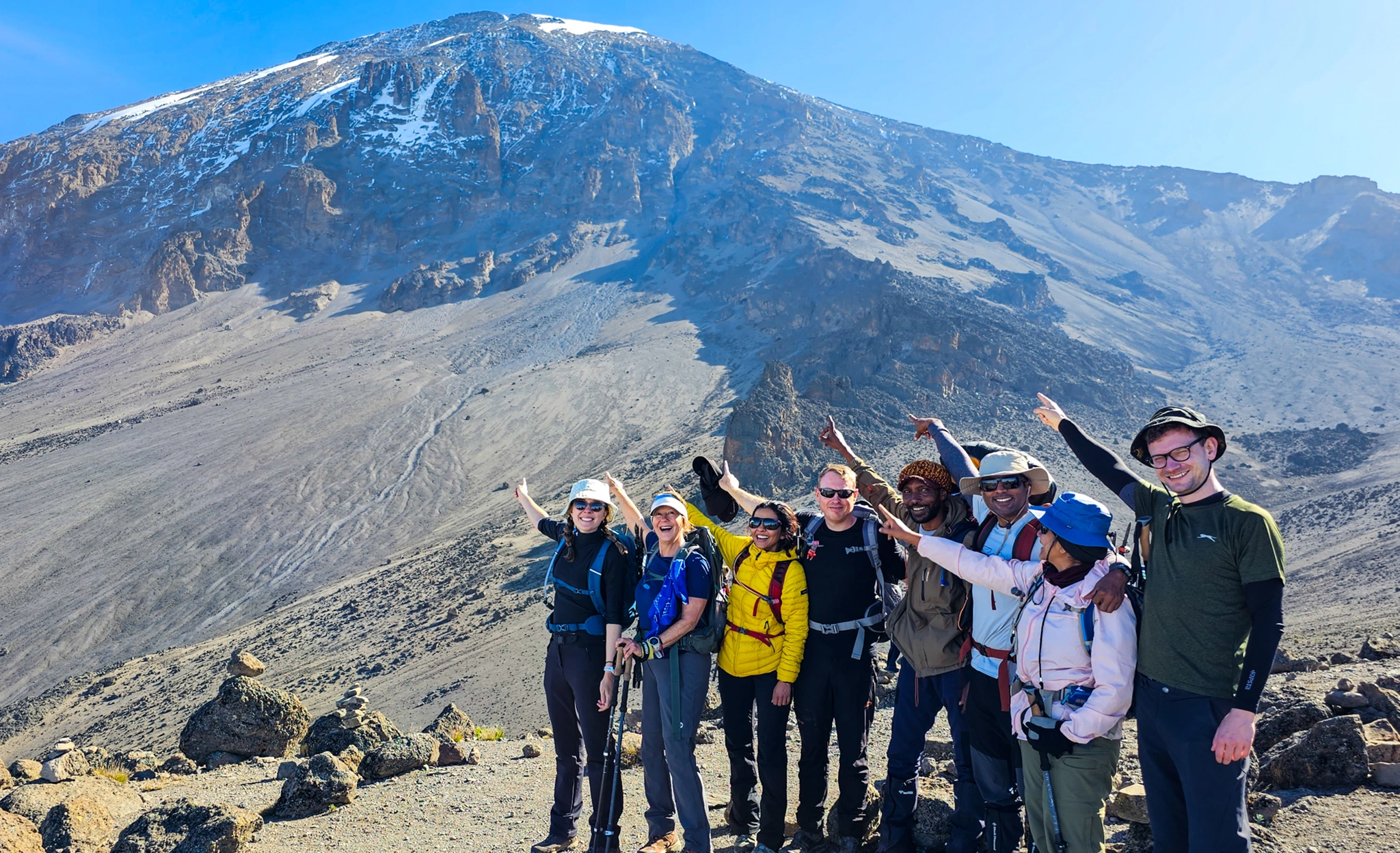
A group of trekkers point to Mount Kilimanjaro.
Purpose of the Kilimanjaro tipping ceremony
The Kilimanjaro tipping ceremony exists to acknowledge the extraordinary effort of the mountain crew. Porters carry heavy loads over rugged terrain, cooks prepare meals under challenging high-altitude conditions, and guides ensure trekkers’ safety and motivation throughout the climb. While staff receive a base wage, tips make up a substantial part of their income. For many, these tips support families, education, and daily living expenses.
The ceremony ensures that every crew member, from lead guide to porter, receives their fair share. Beyond the practical aspect, the ceremony also serves as a meaningful moment of gratitude, connecting climbers with the people who turn the summit dream into reality. Fair tipping also helps maintain ethical standards across the industry. When climbers understand and respect the tipping system, it encourages operators to treat their crews fairly and transparently.
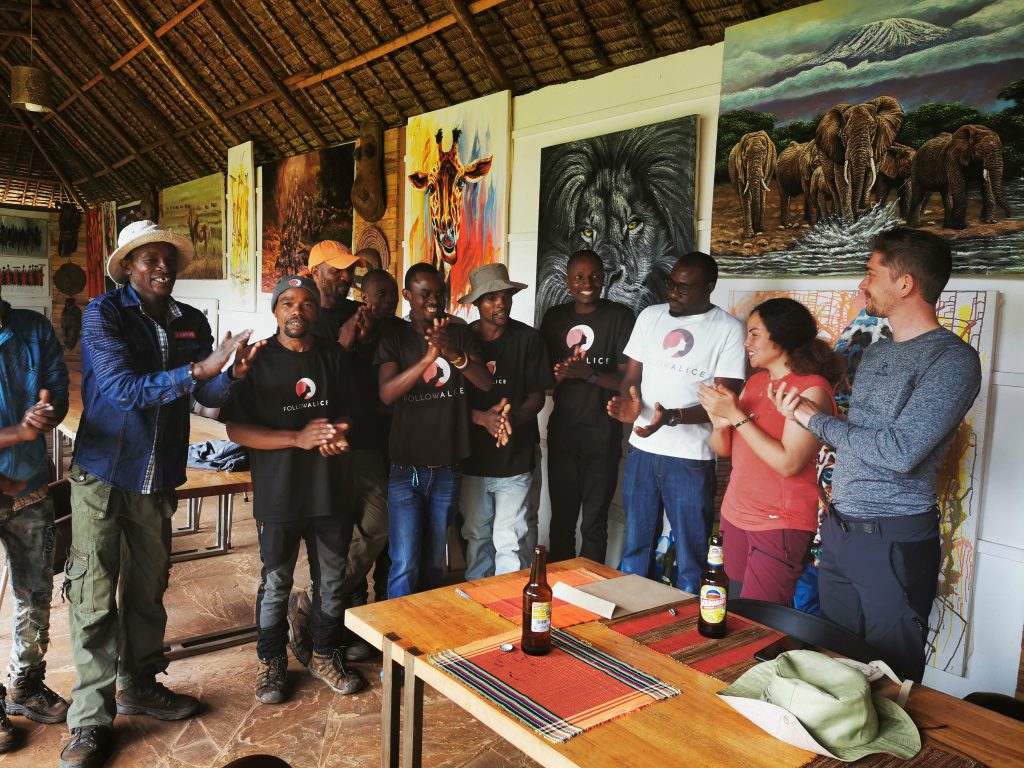
An indoor Kilimanjaro tipping ceremony.
Learn more: How much does it cost to climb Kilimanjaro?
When and where the tipping ceremony takes place
The tipping ceremony usually occurs on the last day on the mountain, after the summit. At this point, climbers have completed their ascent to Uhuru Peak and are descending to the final camp, often Mweka or Millennium Camp. Trekkers present tip envelopes with forms detailing tip distribution, and a spokesperson may address the team with words of thanks, translated into Kiswahili by the lead guide. The atmosphere is celebratory. The crew gathers in song and dance, and trekkers express their gratitude through short speeches and handshakes. It’s a joyful, communal experience that symbolises the shared success of the climb.

Kilimanjaro crew dance and celebrate at a tipping ceremony.
Learn more: Must I tip my Kilimanjaro crew? And how much?
Planning for Kilimanjaro tipping
Including tips in your overall trekking budget is important. Every trek depends on a team of porters, cooks, and guides who manage logistics, carry essential equipment, and ensure climbers’ safety in challenging high-altitude conditions. Their work is physically demanding and often goes unseen, yet it is important to the success of every climb.
Here are practical steps for smooth planning:
- Understand the recommended rates – Review the latest Kilimanjaro tipping guidelines to determine how much to budget for each crew member. Knowing expected amounts for guides, cooks, and porters helps avoid last-minute surprises.
- Confirm crew size – Ask your operator for a breakdown of the number of porters, guides, and other support staff assigned to your group. Tip amounts vary depending on the number of staff and the duration of the trek.
- Plan your currency – Bring US dollars, Tanzanian shillings, or other accepted currencies. Ensure bills are crisp, new, and undamaged. Carrying a mix of denominations allows you to divide tips accurately according to KRTO forms.
- Assign responsibilities – Decide in advance who will act as the group spokesperson for the ceremony and who will collect and manage the cash for distribution. This ensures a smooth, organised process.
- Include tipping in your itinerary budget – Factor tipping into your overall costs when calculating the total trip budget. This prevents unexpected financial pressure at the end of your climb.
- Consider additional support – If a crew member provides exceptional service or extra assistance during the climb, allocate extra funds for discretionary tipping. KRTO guidelines allow for flexibility to reward outstanding performance.
- Prepare for logistics at the hotel – Remember that actual cash distribution occurs after the climb. Keep your contributions secure and organised to make handover efficient and accurate.
- Plan for donations – If you intend to give clothing or equipment, pack items in a separate bag. Ensure donations are practical, in good condition, and handed directly to the intended staff members.
Following these steps ensures a smooth, respectful tipping process that honours the hard work of every crew member while complying with KRTO standards.
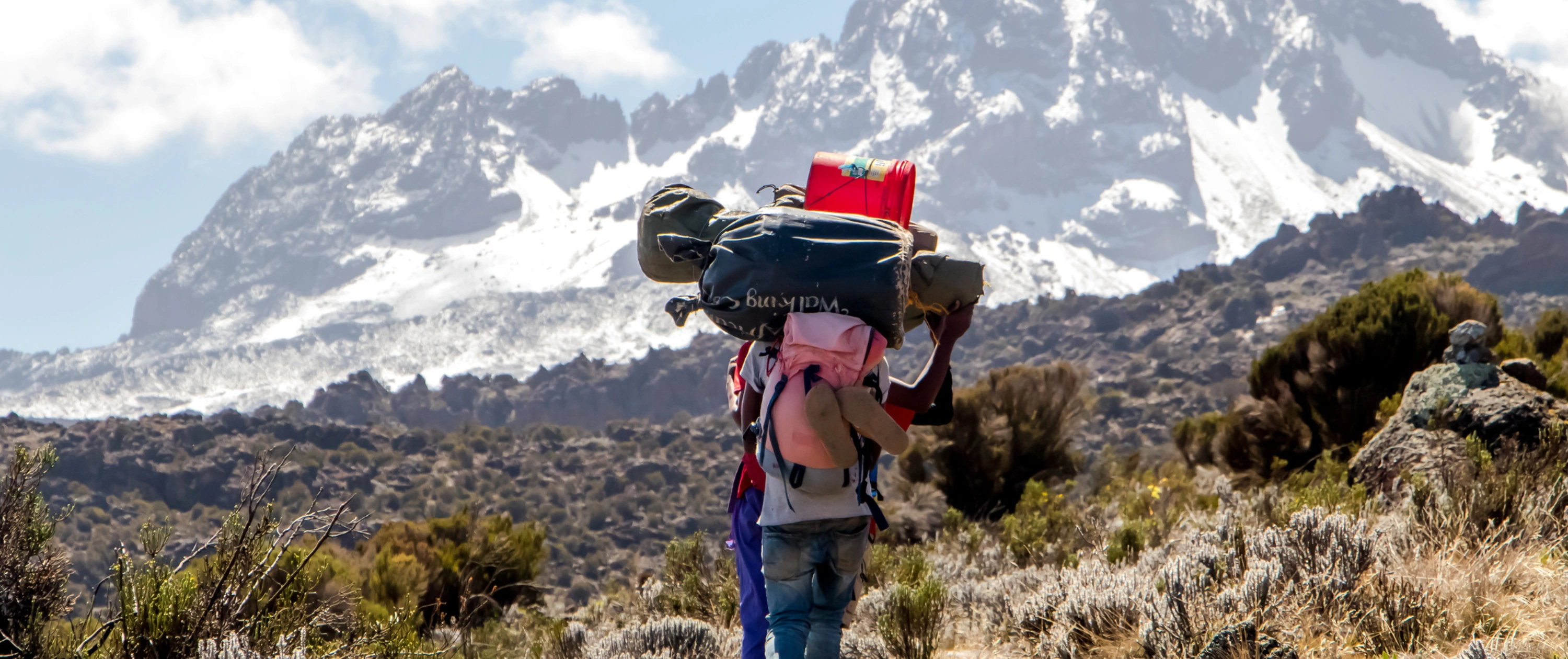
Porters are often carrying heavy loads up and down Mount Kilimanjaro.
{{leadmagnet-one}}
Kilimanjaro porter tipping guide
Tipping on Kilimanjaro follows a structured process that ensures fairness and accountability. The system used by Follow Alice is based on KRTO's official Kilimanjaro porter tipping guide.
Here’s how it works in practice:
- Two envelopes are provided at the final camp, one for the guides and cooks, and another for the porters. Each envelope includes a form listing the number of staff in each role (lead guide, assistant guide, cook, porter).
- The group collectively decides on the tip amounts for each category and records them on the forms. At this stage, no cash is placed in the envelopes.
- The group nominates a spokesperson to deliver a short message of thanks during the ceremony. The lead guide translates these words into Kiswahili.
- The envelopes are handed over, one to the lead guide for guides and cooks, and one to the porters’ representative for the porter team.
- Once the group returns to the hotel, a representative from the trekkers collects the cash contributions from everyone and hands the total to the lead guide.
- Each crew member signs a tip distribution report, confirming receipt of their fair share. This record is reviewed after every climb to ensure full transparency. KRTO oversees this process to guarantee fair and ethical payment.
- The ceremony concludes with singing, dancing, and celebration by everyone — a joyful acknowledgement of a successful climb.
Best practices for tipping on Kilimanjaro
- Avoid private tips: Do not give tips privately to certain crew members. Many climbers notice only the visible staff, but behind-the-scenes support is equally vital.
- Tip as a team: Keep tips consistent for each crew type to reward the team fairly.
- Generous tipping: If your mountain crew provided excellent service, consider tipping each member the highest recommended daily amount for their role. When multiplied by the number of trekking days, this adds up to a meaningful reward that your team will truly appreciate.
This structured approach ensures that every staff member is recognised for their contribution and that the tipping process is transparent and verifiable.
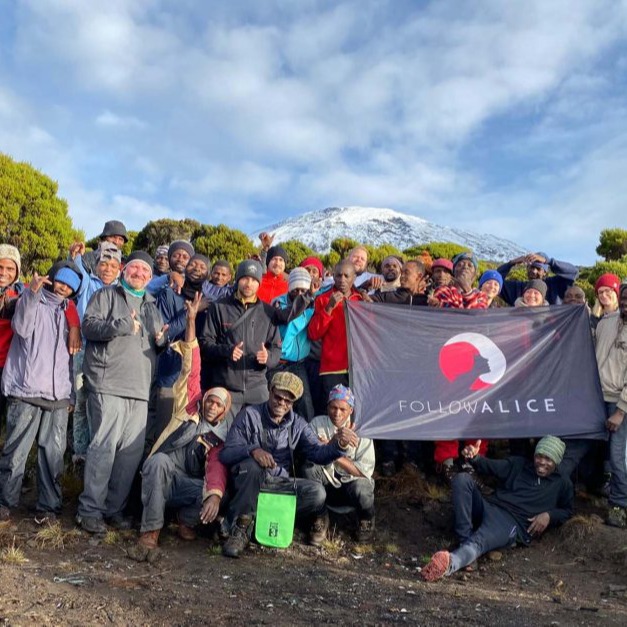
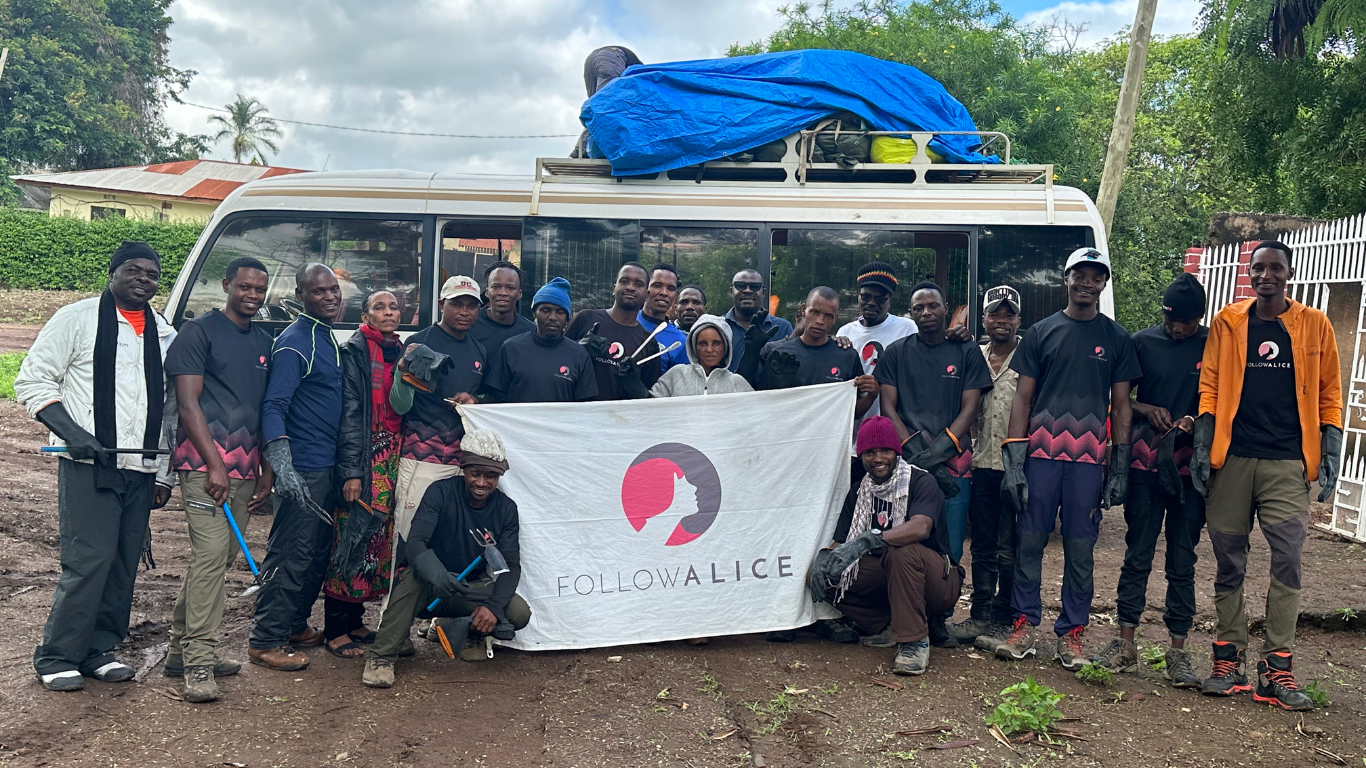
Mountain crew pose with trekkers for a photo.
Learn more: Meals on Kilimanjaro – nutrition is important for summit success!
Kilimanjaro tipping guidelines (updated 2025)
To help climbers prepare adequately, KPAP provides updated Kilimanjaro tipping guidelines each year. These figures reflect fair compensation for the effort and professionalism of the crew.
Below are the 2025 recommended rates in USD per day, per group (not per person):
These ranges are intended as a guide and can vary depending on service quality, trip length, and group size. Larger groups require fewer porters per person, reducing individual tipping costs. Smaller groups have higher crew-to-client ratios, meaning each climber should expect to contribute slightly more.

Trekkers and porters on Kilimanjaro in the moorland band.
Learn more: Kilimanjaro vs Everest Base Camp: which is harder?
How much should you tip porters on Kilimanjaro?
Many trekkers ask, “How much should you tip porters on Kilimanjaro?” The answer depends on several factors:
- Duration of your climb – Longer climbs require more crew days, increasing the total tip.
- Group size – Smaller groups have more crew members per climber, meaning each person contributes more.
- Level of service – Exceptional service deserves recognition through a higher tip.
- Trekking company ethics – Reputable companies, especially those partnered with KPAP, ensure porters receive fair base pay and transparent tipping.
On average, trekkers should budget between $250 and $400 per person for tipping on a standard 6–8 day climb. This amount ensures fair compensation across all crew categories.

Follow Alice porter carrying a heavy load up the mountain.
Learn more: 6 tips for happy feet on Kilimanjaro
Clothing and equipment donations
As another gesture of support, many climbers choose to donate clothing or equipment to porters after completing their trek. Items such as waterproof jackets, thermal layers, gloves, hats, trekking boots, and sturdy backpacks are especially valued, as they directly improve the crew’s safety, comfort, and efficiency on future climbs. Porters often carry heavy loads across rugged terrain and face harsh weather conditions, so high-quality gear can make a significant difference to their well-being.
When donating, it is important to give items directly to the individuals who will use them, rather than handing them to a guide for redistribution. This ensures that the gear reaches those who need it most, particularly porters who may not have the means to replace worn-out clothing or equipment. Thoughtful donations like these are not only practical but also demonstrate respect and gratitude for the vital role porters play in every successful summit.
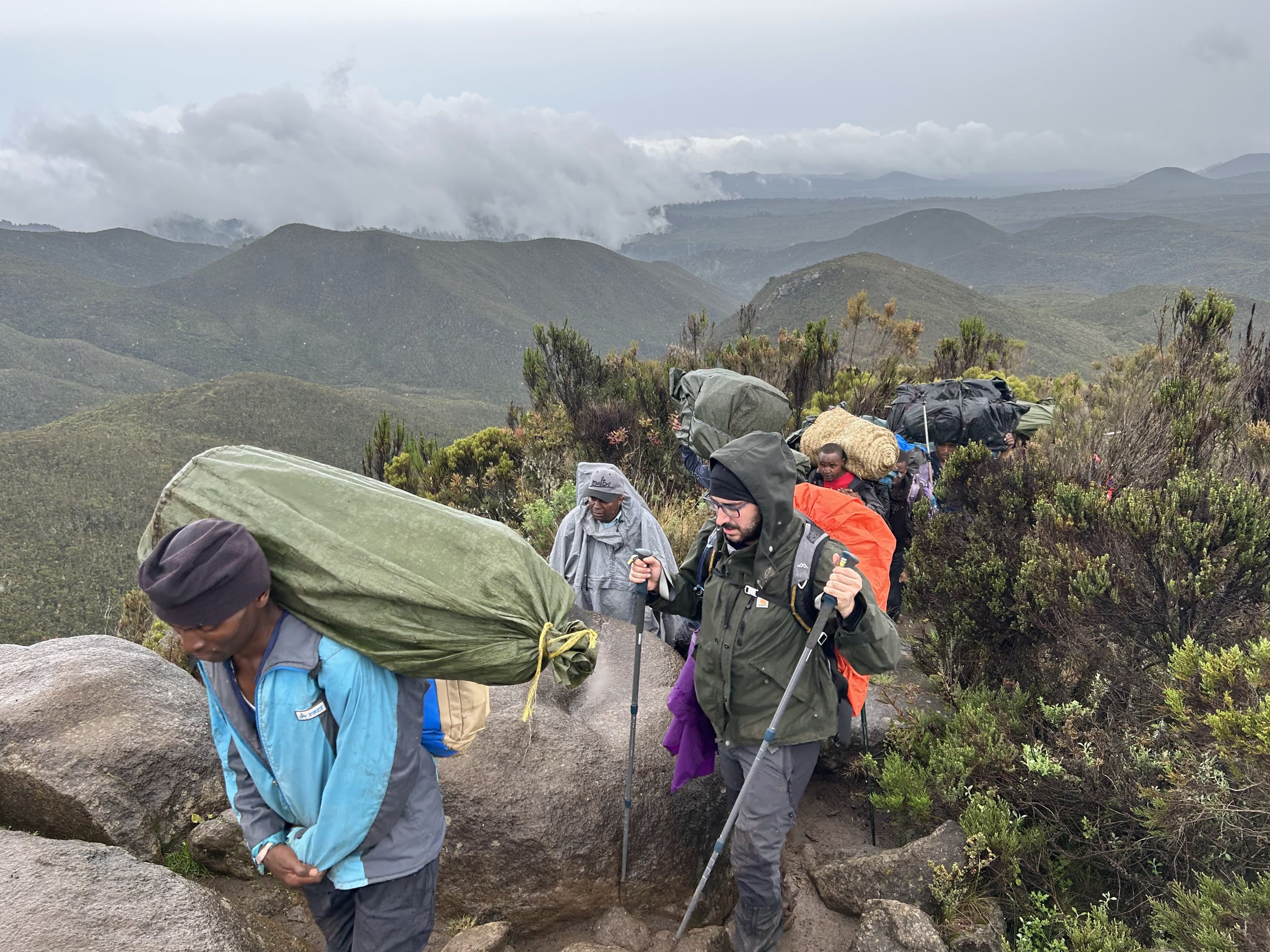
Porters are needed on the Mount Kilimanjaro climb.
Learn more: Height and prominence of Kilimanjaro, and altitude gain when climbing it
Kilimanjaro tipping
The Kilimanjaro tipping ceremony is more than a tradition; it is a structured and essential practice that ensures fairness, transparency, and recognition for the people who make each climb possible. Porters, cooks, and guides work in challenging conditions, often carrying heavy loads and navigating extreme weather, yet their dedication allows trekkers to safely reach the summit. By adhering to the KRTO-backed tipping guidelines, climbers provide not only financial support but also reinforce ethical standards that protect the well-being and livelihoods of the mountain staff.
Have a look at what a typical ceremony looks like:
Responsible tipping, combined with thoughtful donations of equipment or clothing, has a lasting impact. It supports the sustainability of the local trekking industry, encourages fair treatment of staff, and maintains the high standards set by KRTO for load limits, safety, and working conditions. Every contribution, either monetary or practical, helps preserve the integrity of the climbing experience for future trekkers and safeguards the welfare of those who make the journey possible.
For anyone planning a Kilimanjaro trek, understanding the tipping process and preparing accordingly is crucial. Include tips in your overall budget, familiarise yourself with procedures, and approach the ceremony with respect and appreciation. In doing so, you honour the teamwork, skill, and commitment of the mountain crew, ensuring that the climb is not only a personal achievement but also a positive, responsible experience for everyone involved.
Plan your climb with all these guidelines in mind with Follow Alice, and make the Kilimanjaro tipping ceremony a meaningful part of your journey. By doing so, you ensure that your success on Africa’s highest peak truly reflects the effort of the entire team.