


Adventuring made easy
Our dedicated travel consultants make adventuring easy for you by taking away all of the admin. Your only jobs are to train for the adventure if necessary and then pack your bags!


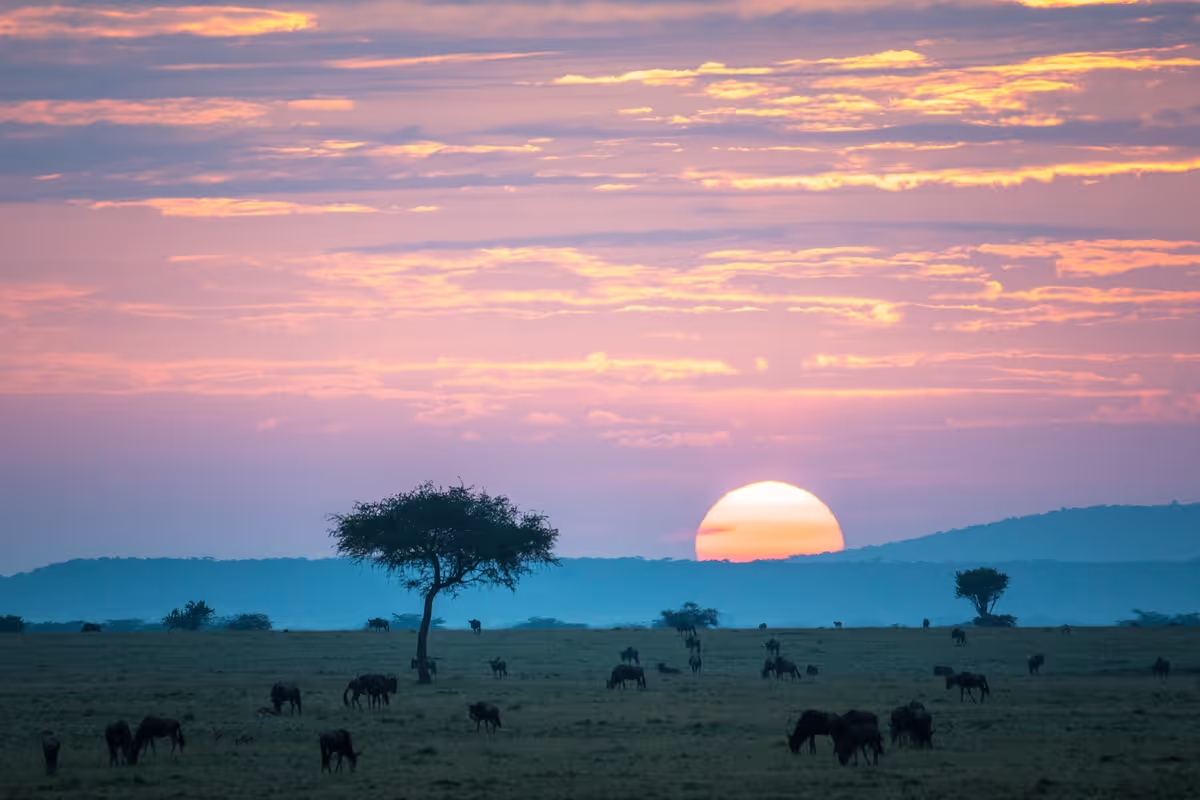


Today we head to Tarangire National Park for an exciting first game drive! This park is famous for its enormous baobab trees, massive elephant population, beautiful bird life, and more! Stand up in your safari car and peer through the gap in the roof at the varied wildlife. And enjoy lunch overlooking Tarangire River and the tree-dotted landscape.


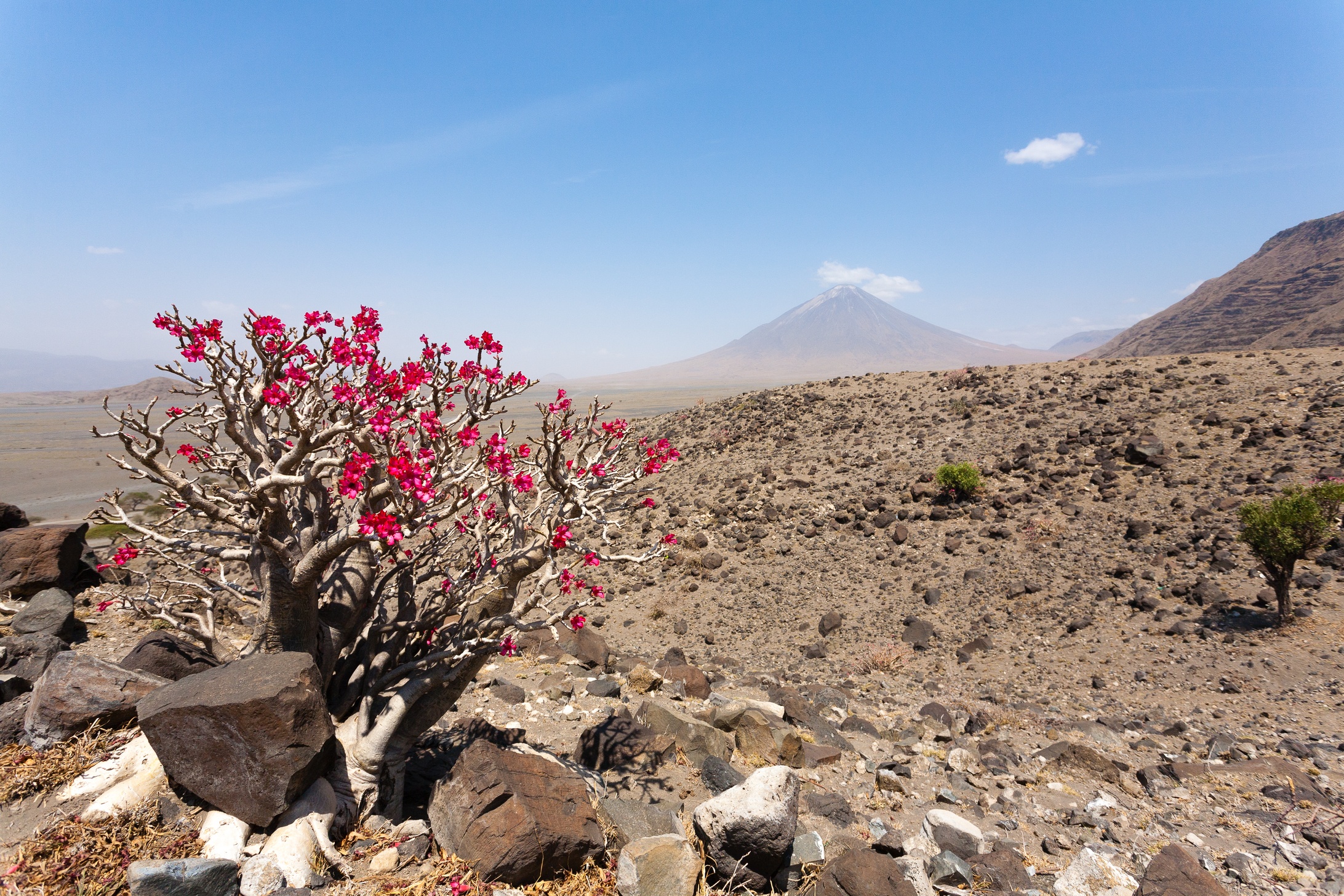
After breakfast we drive to Lake Natron, a soda lake which often has algae blooms that turn it red! In the evening we trek up Ol Doinyo Lengai, an active volcano. We hike at night as it's so hot in the day. It's an incredibly challenging and daring climb that takes around 10 hours to complete. Those who aren't keen on the volcano can opt instead to do the Great Rift hike, which is also brilliant.
We arrive back from the volcano hike in the morning and head to camp to have breakfast and a well-deserved rest. In the afternoon we take a safari walk by the lake shore, led by a local Maasai guide. We also do a guided 5 km roundtrip hike up a narrow gorge to Ngare Sero waterfall. This is a beautiful oasis and you can swim in the pool created by the falls – bliss.


This morning we enjoy a guided safari walk at the southern end of Lake Natron. We look for large game on land, and the lake's famous flamingo stands on the water. Depending on the time of year, the lake could be red in colour from an algae bloom! We then drive to northern Serengeti, where the game-spotting begins long before we even enter this world-class reserve!
Today is all about the animals. Depending on the time of year, we'll either head to northern or central Serengeti to see the enormous herds of the Great Migration, the largest land-based migration in the world! If we head north, it's to see the famous river crossings, where the wildebeest and zebra herds plunge en masse across the Mara and Grumeti Rivers, fearful of crocs and the deadly current.


We enjoy another day of game drives in the world's best game park. The Serengeti is home to the Big Five (lion, elephant, buffalo, rhino and leopard), and our safari guide Kazi will be doing his best to ensure you see all of these magnificent animals, as well as the many other gems that populate the park, like cheetahs, hippos, hyenas, serval cats, kudus, impalas and giraffes.
Today we enjoy a half-day game drive in central or southern Serengeti. January to March is calving season in southern Serengeti, so we’ll be sure to head there to see baby animals if your trip is early in the year. There's also lots of predator action to be observed around these herds. We then drive to the beautiful Ngorongoro highlands for dinner.


Today we do something few include in their Tanzania safari but is a real treat: hike to the floor of Olmoti Crater! This is a chance to see some wildlife up close, and moreover it's a truly beautiful hike. You're also likely to see some Maasai and their cattle in the area. The crater floor is bisected by a valley river, and we can hike to see pretty Munge Waterfall.
This is an epic day, as we drive down into Ngorongoro Crater for a game drive like no other. From the crater rim, the land below looks empty. But once you descend, you realise just how incredibly abundant the wildlife is. Expect to see zebras, buffaloes, elephants, lions, hippos, black rhinos, hyenas and more! In the evening we head to the town of Karatu.

Professional, English-speaking safari guide and driver
A private safari car with pop-up roof and all petrol (fuel)
All game drives
All park fees
All meals
All accommodation
Bottled drinking water
Airfares
Tanzanian visa
Traveller’s insurance
Airport transfers
Tips
Alcohol and soft drinks

We’re one of the only travel companies worldwide with perfect 5* reviews
Our dedicated travel consultants make adventuring easy for you by taking away all of the admin. Your only jobs are to train for the adventure if necessary and then pack your bags!
Our local guides look after you in every way. Our goal is to give every traveller the feeling you get when a friend is showing you their country.

On average, over 70% of your trip price stays in the local economy. It's important to us that the visited communities benefit the most since they're the ones hosting travellers.



Lake Natron’s striking red and pink colours come from salt-loving microorganisms like halophilic bacteria and algae that multiply in its hot, salty, and highly alkaline waters. These hardy organisms produce reddish pigments such as beta-carotene and bacteriorhodopsin to protect themselves from the intense sun and help with photosynthesis.
During the dry season, as water levels drop and salinity rises, these pigments become even more concentrated, transforming the lake into a beautiful canvas of deep reds, pinks, and oranges. Learn more about Lake Natron – Tanzania's beautiful and deadly red lake.

Climbing Ol Doinyo Lengai is no walk in the park — it’s one of East Africa’s most challenging one-day climbs! The route is a steep, direct ascent to the crater rim, followed by a long and tough descent back to the starting point.
It’s not for the fainthearted, but the views at the top make it all worthwhile. The ascent takes around 4 to 6 hours, depending on your fitness level, and the descent takes roughly the same.
Read our full article on Hiking Ol Doinyo Lengai.

Follow Alice Tours (T) LTD is registered in Tanzania and holds all the necessary licences to run Kilimanjaro climbs and safaris.